The Bank Manager's Ledger: A 13-Week Cash Forecast Built for Scrutiny
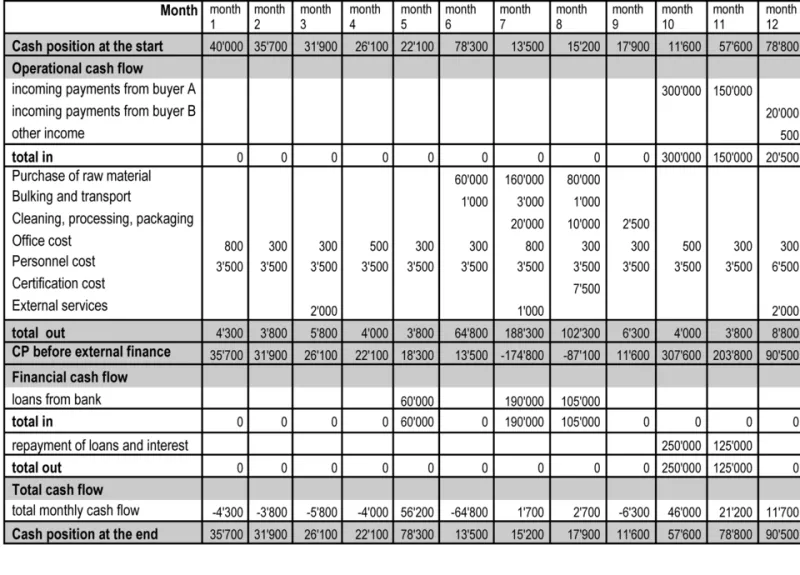
Photo: Oftcc, CC BY-SA 3.0, via Wikimedia Commons
Most UK lenders now ask for more than a set of accounts and a reassuring conversation. Whether you are renewing an overdraft, negotiating an invoice finance facility or answering an insurer's questions about business interruption cover, the request is increasingly the same: a rolling 13-week cash flow forecast. Yet many directors arrive with a spreadsheet that projects profit rather than cash, assumes every order converts on time, and collapses under the first question.
A forecast of this kind is not a compliance artefact. It is the clearest test of whether a business understands its own liquidity - and, presented well, it is one of the few documents that can change a lender's view of risk.
Why Thirteen Weeks, and Why Cash
Thirteen weeks covers a full quarter with a week in hand. It is long enough to capture VAT periods, payroll runs, rent quarters and seasonal swings, and short enough that weekly detail remains meaningful. Monthly forecasts hide the timing mismatches that cause insolvency: a large payment leaving on the 25th while a customer settles on the 2nd of the following month.
The forecast must be built from bank movements, not the profit and loss account. Depreciation, accruals and deferred income have their place in the accounts, but they do not pay wages. Directors who blur the two produce a document that looks plausible and answers nothing.
Begin With the Balance You Can Prove
Open with the reconciled bank position across every account, net of any overdraft or facility drawn. Attach the statements that support it. A forecast that starts with an unverified figure invites doubt about everything that follows.
Receipts should be built invoice by invoice for the first six to eight weeks, using the actual due date adjusted for the customer's observed payment behaviour. For later weeks, customer-level assumptions are acceptable, provided they are written down. Sales orders are not cash; nor are invoices that have not yet been issued. A signed contract is evidence of a future receivable, not of a bank credit.
On the payments side, list each significant outflow separately: payroll, PAYE and National Insurance, VAT, corporation tax, rent and service charge, lease payments, loan and hire purchase instalments, interest, supplier runs, card fees and any director's loan repayments. Grouping them into a single "costs" line is the fastest way to lose a lender's confidence.
Assumptions That Withstand a Question
Every forecast rests on assumptions. The difference between a credible document and an optimistic one is whether those assumptions are visible, sourced and stress-tested. Record them on a dedicated page: debtor days by major customer, a bad debt allowance, seasonality, known price changes, wage awards and the timing of any capital expenditure. Where an assumption is uncertain, state the range rather than a single figure.
Prepare at least two versions: a base case and a downside in which debtor days extend by a fortnight and a key customer delays payment. Lenders are less interested in the optimistic scenario than in how you would respond if it fails to materialise. A forecast that shows the low point of the cash balance, the size of the headroom against your facility, and the actions available to protect it is worth more than a hundred pages of narrative.
The Weekly Rhythm
A forecast is only useful if it is reviewed. Set a fixed slot each week - Monday morning works for many businesses - and compare the week just ended with what was projected. Explain each material variance, update the opening balance, add a new week at the end and roll the document forward.
The meeting should produce decisions, not just numbers: which invoices to chase, which payments to defer, whether to draw on the facility, whether to speak to HMRC about a time to pay arrangement. Minute the conclusions. When a lender later asks how the business is governed, a sequence of dated forecasts with variance notes is persuasive evidence.
Five Mistakes That Undermine Credibility
- Treating confirmed orders or pipeline as receipts.
- Omitting or mis-timing VAT and PAYE, which are rarely negotiable and fall due on fixed dates.
- Ignoring director's loan repayments, dividends and personal guarantees that commit company cash.
- Leaving capital expenditure, one-off professional fees and tax payments out of the plan.
- Hiding hard-coded figures inside formulas, so that no one can trace how a number was reached.
Each of these is easy to fix before submission and difficult to explain afterwards.
Presenting the Forecast in 2026
Lenders and insurers have become more demanding since the tighter credit conditions of recent years, and a request for a 13-week forecast is now routine rather than exceptional. Present it as a coherent pack: a cover page stating the purpose, the date, the version and who prepared and approved it; weekly columns with a monthly summary; supporting schedules including aged debtors and creditors, payroll, VAT and facility statements; and a short narrative explaining the assumptions, the downside case and the mitigants.
Answer the questions the reader will actually ask. When does the cash balance reach its lowest point? How much headroom remains against the facility? What happens if the largest customer pays four weeks late? What actions would you take, and by when? Keep version control tight, and never send a forecast that has been edited after approval without re-approving it.
A Final Check
Before the pack leaves your office, confirm that the opening balance reconciles to the bank, that every material payment and receipt has an owner and a date, that tax and payroll are included, that the downside case is genuinely down, and that the board has seen and minuted the document. A forecast built this way is more than a lender's requirement. It is the weekly discipline that keeps a company solvent.